Rohit Sharma's Leadership Style: A Case Study
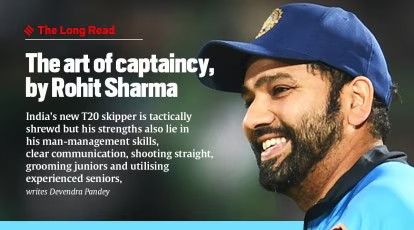
Rohit Sharma has emerged as one of the most influential cricket captains in contemporary international cricket. Examining his leadership during recent series reveals a blend of calm composure, strategic clarity, and player empowerment that has translated into consistent results. This case study dissects observable behaviors, decision making patterns, and team dynamics to understand how his approach aligns with modern leadership principles and why it resonates with both senior players and newcomers.
Leadership philosophy
At the core of Rohit Sharma’s leadership is a calm demeanour that diffuses pressure and fosters clarity. He communicates expectations succinctly, yet allows flexibility in execution. That trust encourages players to take initiative and adapt in real time. Senior players report greater autonomy while younger squad members benefit from mentorship and clear role definitions. The resulting environment balances accountability with creative freedom, which is critical during tense match situations.
Tactical decisions
Rohit’s tactical acumen is visible in his batting order flexibility, use of bowlers, and field placements tailored to match context. He often rotates bowlers proactively to exploit conditions and anticipates opposition weaknesses through careful pre-game planning. In recent series, timely introductions of part-time bowlers and bold fielding setups have sparked turning points. His willingness to back unconventional calls reflects confidence and deep situational awareness, qualities that embolden the team.
Man-management and culture
A defining element is his focus on man-management. Rohit balances firm expectations with empathy, handling form slumps and personal issues with discretion. He celebrates small successes publicly and addresses errors privately, preserving player morale. The culture he cultivates prioritizes collective responsibility over individual heroics, creating resilience when faced with losses. This approach has strengthened squad unity and reduced friction during high pressure tours.
Communication style
His communication is concise and confidence-inspiring. Pre-match briefs are practical, highlighting clear roles and contingency plans. On-field words are measured, avoiding public criticism while driving focus. This consistent messaging reduces uncertainty and accelerates decision cycles, enabling quicker adjustments mid-game. Team leaders translate his direction into actionable tasks, ensuring alignment across batting, bowling, and fielding units.
Recent series evidence shows measurable improvements in win percentages, chase success rates, and reduced middle overs collapse frequency. The team’s clarity on roles led to sharper powerplay performances and better handling of knockout moments. Statistical indicators such as partnership longevity and bowling economy under pressure improved, suggesting that leadership choices had tangible impact beyond rhetoric. Observers credit both strategic planning and psychological safety for these gains.
Across formats, his steady temperament and adaptive tactics have fostered a culture where players take calculated risks under guided oversight. Young talents flourish when given defined targets and supportive coaching, while veterans appreciate clear delegation that respects experience. The case of recent series illustrates that leadership effectiveness combines visible strategy with invisible calibration of confidence and responsibility. While external conditions and individual form always matter, Rohit Sharma’s model demonstrates how consistent communication, trust in the squad, and decisive yet flexible planning can convert potential into performance, making leadership itself a decisive competitive advantage and sustain long term success.