Virat Kohli: From Captain to Mentor
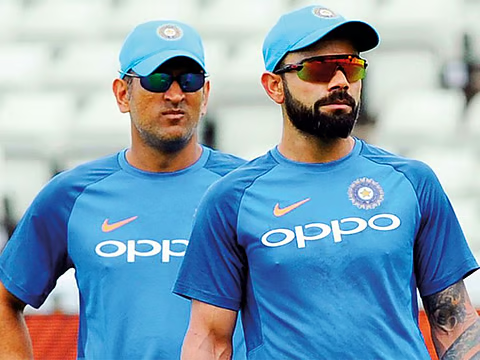
Virat Kohli’s transition from full-time captain to a nurturing mentor has reshaped both his role and the team’s dynamics. After years of fierce on-field leadership, Kohli now channels his intensity into developing younger players, blending experience with empathy. This transition is less about stepping back and more about evolving influence, and its effects are visible in training grounds, dressing rooms, and matchday strategies.
Leadership Reimagined
When a player of Kohli’s stature cedes the captaincy, the spotlight often shifts. Yet Kohli has used that spotlight to spotlight others. Rather than dictating every tactical decision, he focuses on individual development, correcting technique, sharpening mental resilience, and sharing insights on handling pressure. His approach reframes leadership as empowerment, letting emerging talents grow while still benefiting from his cricketing intellect.
Mentoring on and off the Field
Kohli’s mentorship extends beyond technical coaching. He mentors through example: discipline in fitness, aggression channeled constructively, and a relentless pursuit of excellence. Younger batsmen speak about the clarity he offers in one-on-one sessions, the candid feedback, and the patience to simulate match scenarios. Off the field he advises on routines, nutrition, and handling media scrutiny, equipping players for both performance and public life.
Impact on Team Culture
The presence of a senior figure who chooses to nurture rather than dominate alters team culture. Room for fresh leadership styles emerges, encouraging collaborative decision making and diversified tactics. Kohli’s mentorship fosters confidence among rookies, reduces fear of failure, and normalizes honest conversations about form and fitness. This cultural shift can translate into a more adaptable, resilient squad under pressure.
Strategic Advantages
From a tactical perspective, Kohli’s role as mentor preserves institutional knowledge while allowing captains to make real-time calls. He serves as a sounding board during tense moments and a reservoir of situational awareness accumulated over years. His presence on the bench or in the dugout offers captains immediate access to a strategist without undermining their authority, creating a balance between experience and contemporary leadership.
There are potential risks: younger players might become over-reliant on Kohli’s guidance, or the team could struggle if role boundaries blur. Yet managed consciously, mentorship can be calibrated to encourage autonomy while providing safety nets. The best outcome is a generation of confident cricketers who internalize lessons and apply them independently.
Ultimately, Kohli’s evolution from captain to mentor is an example of mature leadership adapting to new team needs. By investing time in nurturing talent, he contributes to a sustainable legacy beyond trophies — a culture where excellence is taught, replicated, and refined. This nuanced shift strengthens the squad today and plants seeds for future leadership, ensuring that the principles he embodies continue to influence the team long after individual careers have ended.
His willingness to listen, teach, and step aside when necessary models a modern form of stewardship that prepares the next generation to inherit responsibility with confidence and humility, ensuring that team success is sustained by shared values rather than reliance on any single individual for seasons to come, and inspires leadership throughout.