Virat Kohli vs. Rohit Sharma: A Statistical Comparison
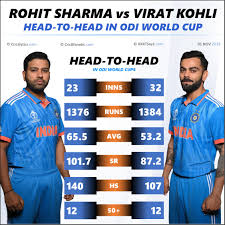
In the evolving narrative of contemporary cricket, the comparison between Virat Kohli and Rohit Sharma remains one of the most compelling debates among fans and analysts. Both batsmen have carried the expectations of a cricket-mad nation and delivered match-defining performances across formats. This analysis focuses on their performances in recent matches, breaking down key metrics and contextualizing their contributions to team outcomes.
Key metrics compared
When assessing recent form, look at averages, strike rates, conversion rates (fifties to hundreds), and match-winning innings. Kohli has often been lauded for his exceptional average and consistency, especially in chases, where his ability to pace an innings stands out. Rohit, on the other hand, has been notable for his capacity to produce big individual scores and accelerate quickly, which reflects in higher strike rates during the middle and late overs in limited-overs cricket. Recent matches show both players adapting their approaches: Kohli balancing control and aggression, and Rohit exploiting field placements to convert starts into sizable totals.
Recent form and consistency
Evaluating the last dozen or so matches for each player reveals trends rather than isolated peaks. Kohli’s recent outings have demonstrated a high percentage of meaningful contributions — knocks that anchor the innings and shift momentum. Rohit’s recent performances include several explosive innings that change the complexion of a match in short periods. The distinction is subtle: Kohli often accumulates, rotating the strike and building partnerships; Rohit tends to switch gears and dominate sessions, turning moderate situations into commanding positions.
Performance across formats
Across Tests, ODIs, and T20s, each player’s role slightly alters how their statistics are judged. In Tests, resilience, time at the crease and conversion to centuries matter most — areas where Kohli’s temperament and technique shine. In ODIs and T20s, strike rate and boundary-hitting come to the fore; Rohit’s ability to find gaps and launch into the innings makes him a potent limited-overs force. Recent matches indicate both players remain central to strategy in all formats, often adapting their strike patterns to suit team requirements.
Situational impact and match-winning ability
Beyond aggregates, situational performance defines greatness. Who steps up under pressure? Who finishes chases? Kohli’s reputation as a chase master is reflected in his ability to shepherd chases, playing calculated strokes when the game demands patience. Rohit’s big-hitting can flip control quickly, forcing opponents to rethink bowling plans. Recent encounters show instances where each player’s special skill set has been decisive — Kohli through composed run-chases, Rohit via sudden, momentum-swinging innings.
Fielding, leadership influence and fitness add layers to the statistical picture. Rohit’s nimbleness in the outfield and strategic captaincy decisions have tangible impacts on match tempo, while Kohli’s intensity, running between the wickets and vocal leadership often lift team energy. Looking at recent match data through this multifaceted lens suggests that neither player is uniformly superior; rather, each excels in scenarios suited to their strengths, making their rivalry a complementary study of excellence rather than a simple hierarchy.